

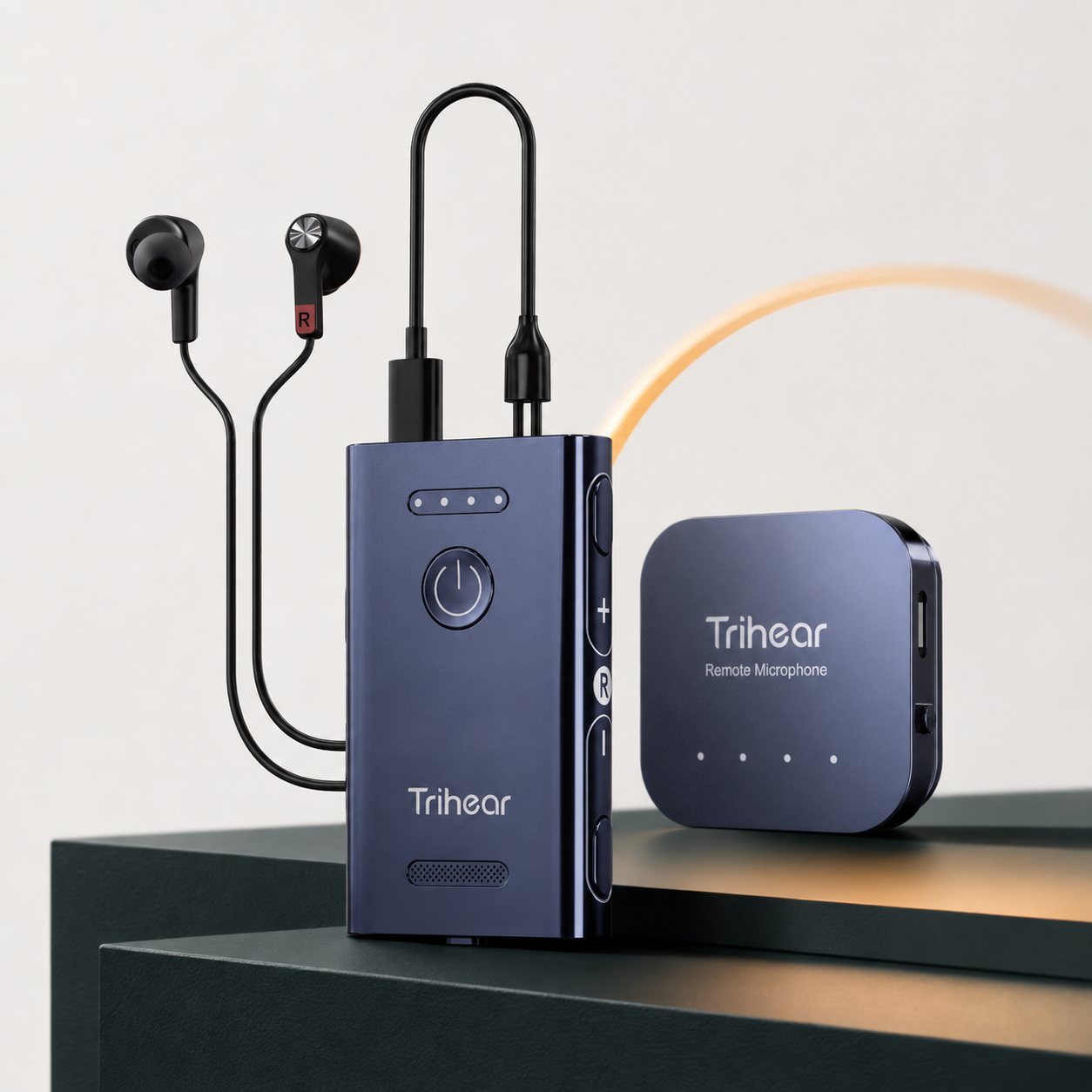

A remote microphone can sound like a very simple accessory.
But in the right situation, changing where the voice is captured can make a meaningful difference.
The idea is straightforward: instead of asking a speaker’s voice to travel across a room before reaching the listener, the microphone is placed closer to the person speaking.
That can be especially useful when distance, background noise, or room acoustics make conversation harder to follow.
So when does a remote microphone actually help?
When One Important Speaker Is Far Away
Distance is one of the clearest situations where a remote microphone can be useful.
Imagine a meeting, lecture, class, church service, or presentation.
The listener may be sitting several meters away from the person speaking.
Even if the voice is loud enough to hear, it still has to travel through the room. Along the way, it can mix with background sounds and reflections from walls, floors, and furniture.
A remote microphone takes a different approach.
Instead of simply increasing the volume at the listener’s side, it captures the speaker’s voice closer to the source and sends that audio to a compatible listening device.
In other words:
Speaker → Remote Microphone → Listener
Sometimes, better listening starts by shortening the listening distance.
When Background Noise Competes With Speech
Restaurants, family gatherings, classrooms, and busy offices rarely contain only one sound.
There may be music, dishes, air conditioning, keyboards, side conversations, or other people speaking nearby.
If the microphone is located at the listener’s ears, all of those sounds are part of the environment being picked up.
Placing a remote microphone closer to the main speaker can help create a more direct path for that person’s voice.
This does not make the room itself quieter.
Instead, it changes the position from which the important voice is captured.
That distinction matters.
When a Meeting Has One Main Speaker
Remote microphones can also be useful in meetings, especially when there is one person presenting or leading most of the discussion.
For example, the microphone may be placed near:
- a presenter
- a meeting leader
- a teacher
- a tour guide
- a person speaking from across a long table
In these situations, the goal is not simply to make every sound louder.
It is to give the main speaker a more direct audio path to the listener.
When Watching or Listening From Another Room Position
A remote microphone can also be helpful in some everyday situations where the sound source is physically farther away.
For example, one person may be speaking from the other side of a room while the listener remains seated elsewhere.
Instead of asking the listener to move closer every time, the microphone can move closer to the speaker.
That is one of the most practical ideas behind remote microphone technology:
move the microphone, not the listener.
When Is a Remote Microphone Less Useful?

A remote microphone is not the answer to every listening difficulty.
In a fast-moving group conversation where many people are speaking from different directions, one microphone placed near a single speaker may not capture the entire conversation effectively.
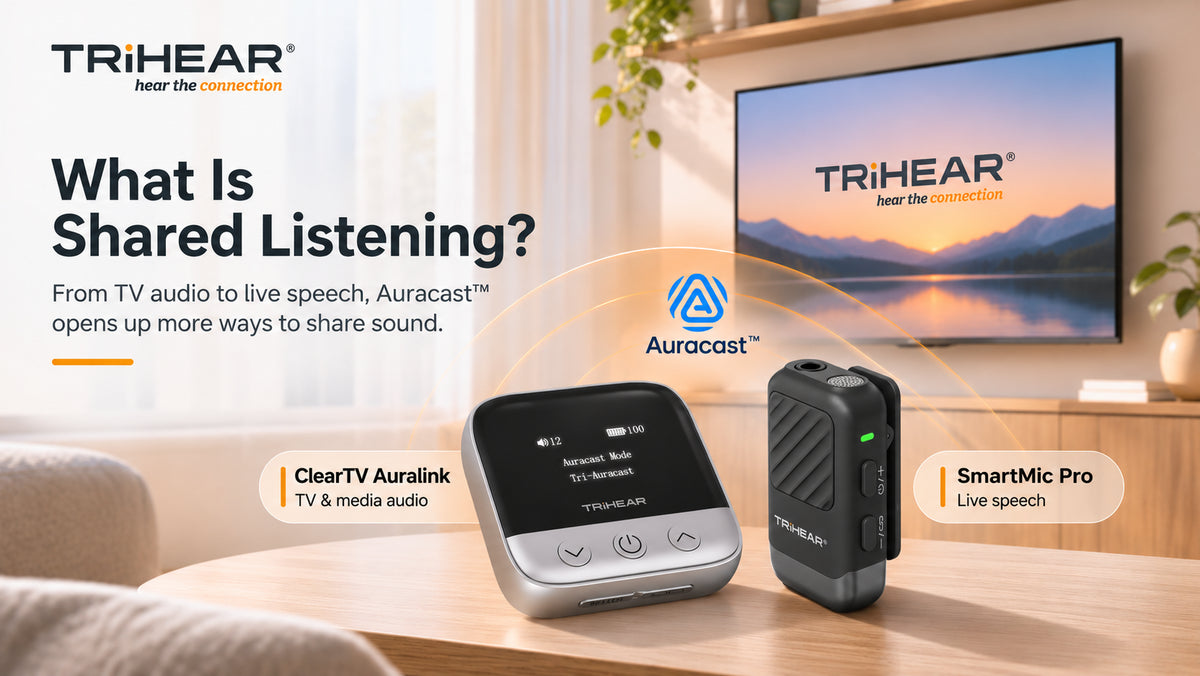
Likewise, if the main problem is television audio, a dedicated TV streaming solution may be more appropriate.
Different listening situations may need different approaches.
That is why it helps to start with one question:
What is making this situation difficult to follow?
Is it distance?
Background noise?
Changing speakers?
The audio source itself?
Understanding the problem first makes it easier to choose the right kind of support.
Compatibility Still Matters
Remote microphones are not universally compatible with every hearing device.
Compatibility can depend on the exact hearing aid model, generation, firmware, and supported wireless technology.
Before choosing a remote microphone, it is important to confirm that it works with the hearing devices being used.
A useful accessory is only useful when the connection works.
A Simple Idea With a Practical Purpose
Remote microphones are built around a simple concept:
capture the voice closer to the person speaking.
That can make them particularly useful in situations where one important speaker is farther away or where the listening environment makes speech more difficult to follow.
Sometimes the most helpful change is not more volume.
It is a better path from the speaker to the listener.
Explore Remote Microphone Solutions
TRIHEAR offers remote microphone solutions designed for different listening needs and compatible hearing devices.
Explore TRIHEAR Remote Microphones →


发表评论
此站点受 hCaptcha 保护,并且 hCaptcha 隐私政策和服务条款适用。