

One person turns the TV up.
Someone else in the room says it is already too loud.
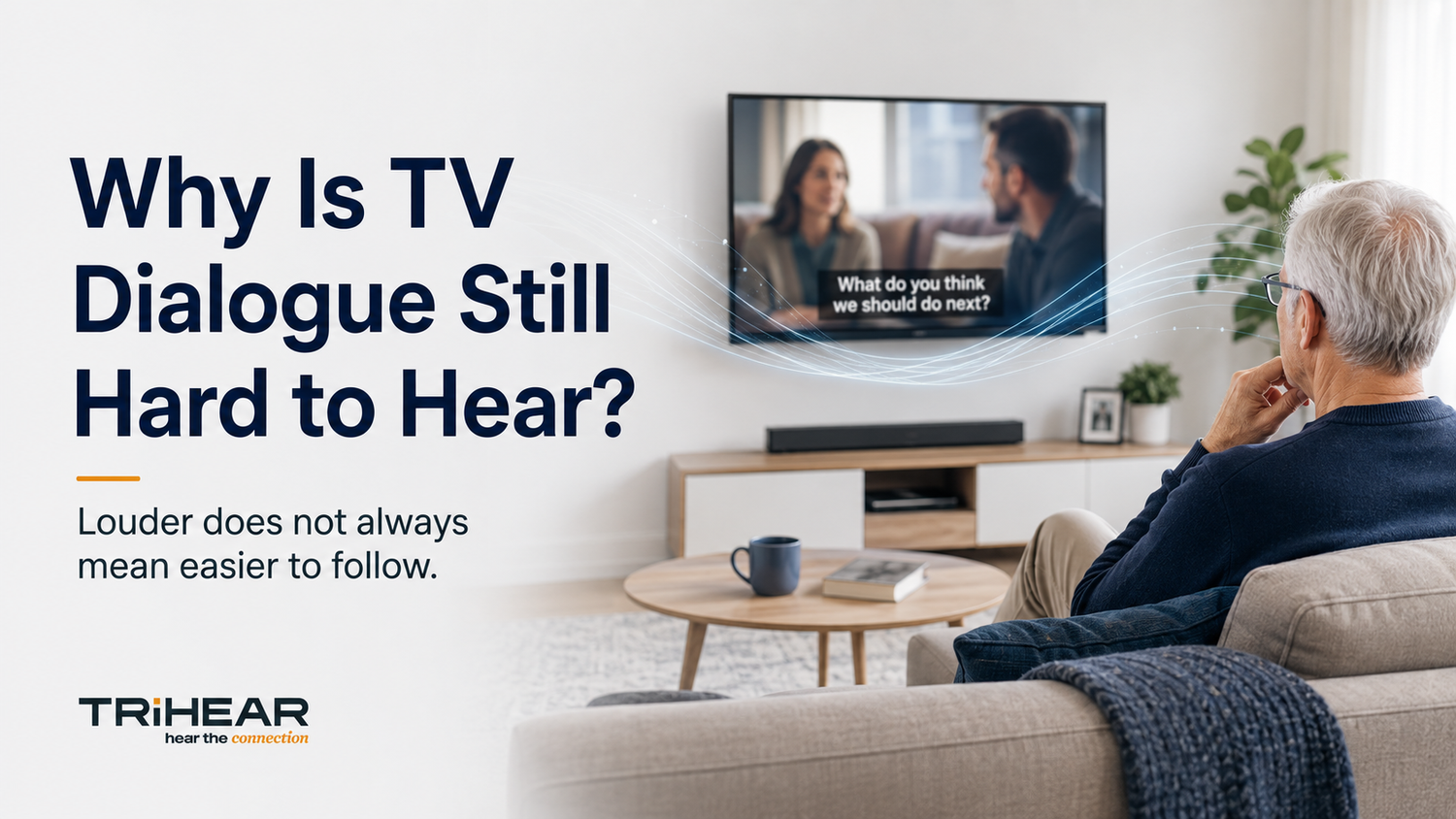
Yet the dialogue still feels difficult to follow.
It is a familiar situation in many homes, especially when different people have different listening needs. And it raises an important question:
If the television is already loud enough, why can speech still be hard to understand?
The answer is that loudness and speech clarity are not exactly the same thing.
Turning up the volume may help in some situations. But television audio contains much more than dialogue, and all of that sound still has to travel through the room before reaching the listener.
Understanding what happens along that path can make it easier to choose a TV listening setup that fits the individual viewer.
Louder Does Not Always Mean Easier to Follow
A television program rarely contains speech alone.
A single scene may include:
- dialogue;
- background music;
- sound effects;
- environmental sounds;
- several people speaking at once.
When the TV volume is increased, these elements generally become louder together.
That means raising the overall volume does not necessarily change the relationship between the voice you want to hear and the other sounds surrounding it.
For some viewers, the TV may already sound loud while individual words remain difficult to separate from the rest of the audio.
This is why the question is sometimes less about:
“Is the TV loud enough?”
and more about:
“How is the sound reaching the listener?”
Why TV Dialogue Can Be Harder to Follow
Several factors can contribute to the experience.
1. Dialogue has to compete with the rest of the mix
Films, television series and other programs are designed to create a complete sound environment.
Music establishes mood. Effects add realism. Background sounds create a sense of place.
But these elements can also make the listener’s task more demanding.
Instead of following speech in isolation, the listener may need to separate dialogue from several other sounds happening at the same time.
Turning everything up does not necessarily make that separation easier.
2. The television is usually some distance away
The TV speakers are rarely positioned next to the viewer.
Their sound has to travel across the room before it reaches the listener.
During that journey, the sound interacts with the environment around it.
A viewer sitting several metres away therefore hears the television only after the audio has travelled through the room.
Distance alone does not mean someone will struggle to understand TV dialogue, but it is one of the factors that can influence what ultimately reaches the listener.
If you would like to explore this idea in more detail, we recently discussed it in:
Closing the Distance: Why Better Hearing Sometimes Starts with Moving the Microphone
3. The room also becomes part of the listening environment
Walls, floors, furniture and other surfaces can affect how sound moves through a room.
Reflections combine with the original TV audio, while other sounds in the home may also be present.
For some listeners, this can make speech more difficult to separate from everything else they hear.
The result can feel frustrating:
the television is louder, but the conversation on screen still requires effort to follow.
The Family Volume Problem
There is another practical issue.
A shared television usually has one room volume.
But the people watching it may not have the same listening preferences.
One person may want the television louder.
Another may already find that volume uncomfortable.
The problem is not necessarily that either person has chosen the “wrong” setting.
They simply have different listening needs.
This is where personal TV listening becomes useful as a concept.
Instead of asking the television speakers to meet everyone’s needs with one volume level, a personal listening setup can create an additional listening path for one viewer.
What Personal TV Listening Changes

A conventional TV setup mainly relies on one path:
TV speakers → room → listener
A personal listening solution adds another possibility:
TV audio or nearby sound source → personal listening system → individual listener
The television itself does not necessarily become louder.
Instead, the user receives the audio through a listening setup intended specifically for them.
This can be especially useful in households where one person wants additional listening support while others prefer to keep the room volume at a different level.
The important point is not that personal listening automatically makes every piece of dialogue clear.
What changes is the way the television audio reaches the individual listener.
Two Ways Personal TV Listening Can Work

Not every user needs the same type of setup.
Two common approaches illustrate the difference.
A dedicated listening receiver
Some users may prefer a separate listening receiver with physical controls.
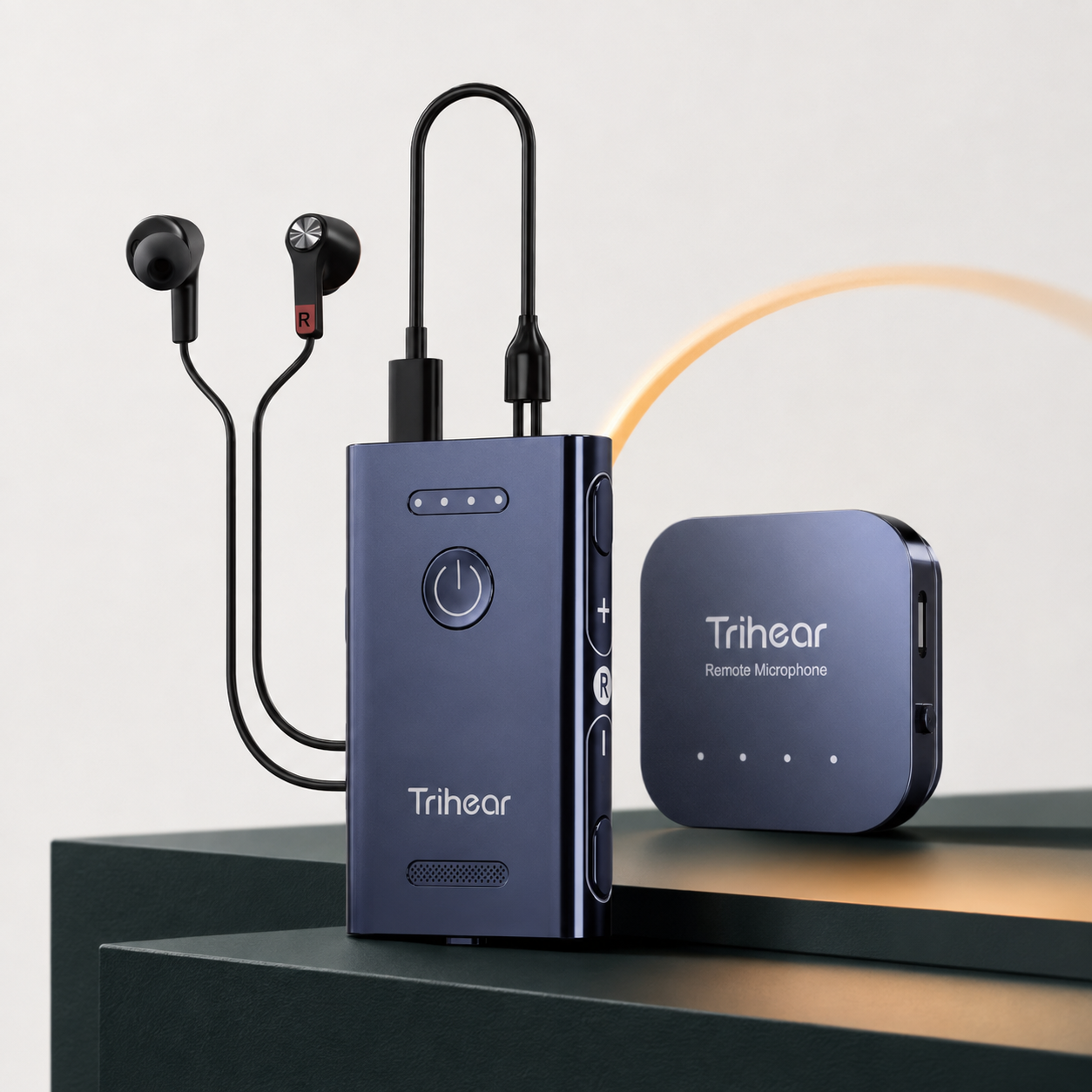
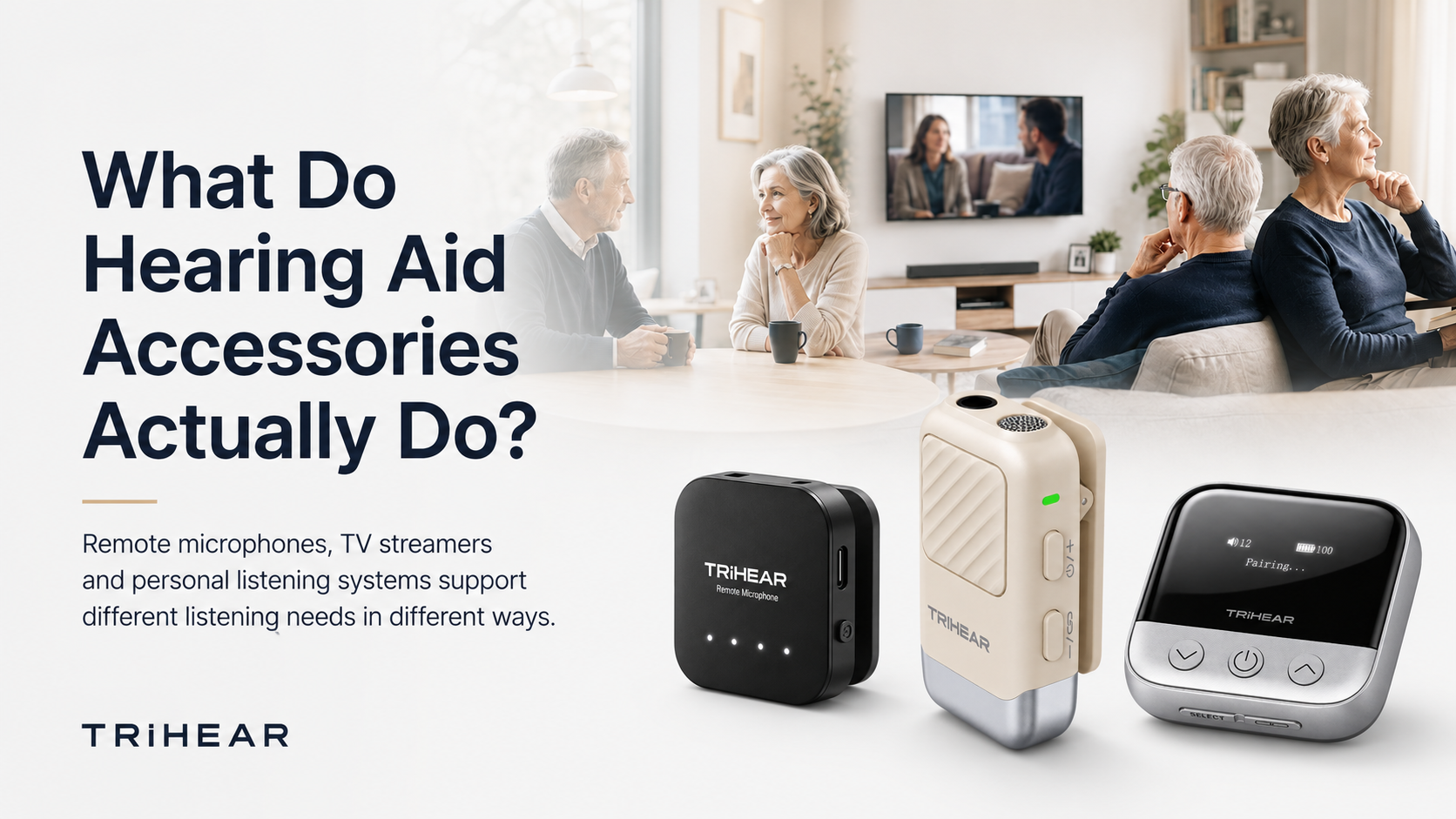
TRIHEAR Convo More is one example of this approach.
For TV listening, its remote microphone can be placed near the television sound source while the user listens through the dedicated receiver.
The receiver offers physical volume controls and Local Mic / Remote Mic switching, and it can be worn using a lanyard or clip. Daily operation does not require an app.
These design choices may be particularly relevant for older users who prefer visible controls and a device that can be handled without navigating a smartphone interface.
Convo More can therefore function as a personal TV listening setup while remaining separate from the television’s normal room audio.
Streaming to compatible hearing devices
Other users may already wear compatible hearing devices and prefer the TV audio to be delivered through those devices.
TRIHEAR ClearTV represents this type of approach.
Rather than relying only on the television speakers to send sound across the room, ClearTV is designed to transmit TV audio to compatible hearing devices for personal listening.
This creates a different kind of setup:
instead of carrying a separate listening receiver, the user listens through a compatible device they already wear.
Neither approach is automatically better.
They simply reflect different ways of building a personal listening path.
Which TV Listening Setup Makes More Sense?
A useful starting point is not the product name.
It is the listener’s existing setup and daily habits.
Consider questions such as:
Do you already use a compatible hearing device?
If so, streaming TV audio to that device may fit naturally into your existing routine.
Do you prefer physical controls?
Some users feel more comfortable adjusting a dedicated receiver directly rather than managing another app or phone connection.
Do other people watch TV with you?
If different viewers prefer very different volume levels, a personal listening solution may help separate individual listening needs from the shared room volume.
How comfortable are you handling small devices?
The size of controls, wearing method and number of setup steps can matter just as much as technical features.
Is television your main listening challenge?
Someone whose primary difficulty is TV listening may need a different setup from someone looking for support across meetings, conversations, lectures and other environments.
There is no single answer that fits every listener.
The goal is to match the listening path to the person using it.
The Goal Is Not Simply a Louder TV
When dialogue is difficult to follow, increasing the television volume can be an understandable first step.
But higher volume does not automatically separate speech from music, effects, room reflections or other competing sounds.
TV dialogue may be influenced by several factors at once:
- the audio mix;
- viewing distance;
- room acoustics;
- individual listening needs.
Personal TV listening solutions take a different approach.
Instead of relying entirely on one shared room volume, they create another way for television audio to reach the individual viewer.
For some users, that may involve a dedicated listening receiver such as Convo More.
For others, it may mean streaming TV audio to compatible hearing devices through a solution such as ClearTV.
The goal is not necessarily a louder television. It is a listening setup that better matches the needs of the individual viewer.
Explore TRIHEAR TV listening solutions:


Leave a comment
This site is protected by hCaptcha and the hCaptcha Privacy Policy and Terms of Service apply.