

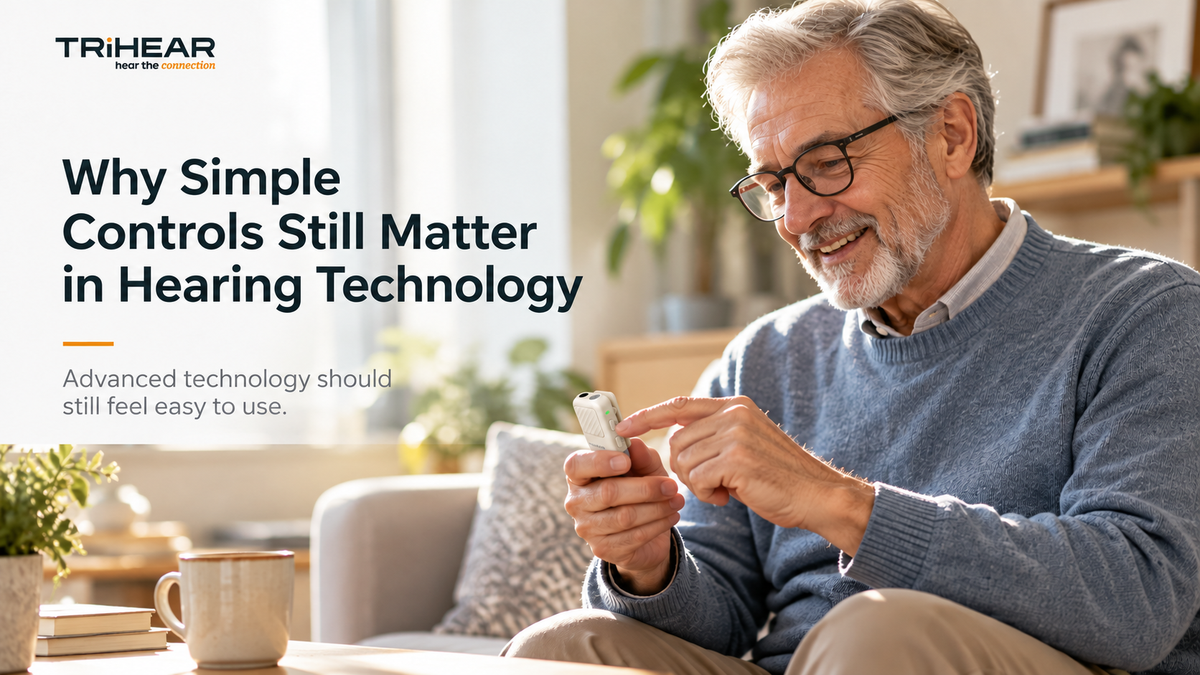
Hearing technology is becoming more advanced.
Wireless connectivity, smarter processing, multiple listening modes and app-based controls can all make devices more capable than before.
But more capability does not always mean a better everyday experience.
For many users, what matters just as much is something much simpler:
Can I understand how to use it without thinking too much about it?
More Features Do Not Always Mean Easier Use
A product can include many useful functions and still feel difficult to use.
The challenge often appears in small everyday moments:
- turning the device on
- adjusting the volume
- switching between listening modes
- reconnecting after a break
- understanding whether the device is working as expected
None of these actions are complicated on their own.
But when several steps, menus or settings are involved, everyday use can begin to feel less intuitive.
That is why usability should be considered alongside technical performance.
Everyday Hearing Support Happens in Small Actions
Most people do not interact with hearing technology by thinking about specifications.
They interact with it through simple actions.
Turn it on.
Adjust the volume.
Choose a mode.
Start listening.
When these actions are clear and predictable, technology can fit more naturally into everyday routines.
As devices become more sophisticated, the interface does not necessarily need to become more complicated with them.
Good technology can be sophisticated inside and simple outside.
Simplicity Can Be Part of Accessibility
Different users prefer different ways of interacting with technology.
Some may feel comfortable managing settings through a smartphone app.
Others may prefer physical buttons, visible status information or fewer setup steps.
Neither approach is automatically better.
What matters is giving users a way to interact with technology that feels understandable and practical for them.
Small design choices can make a meaningful difference:
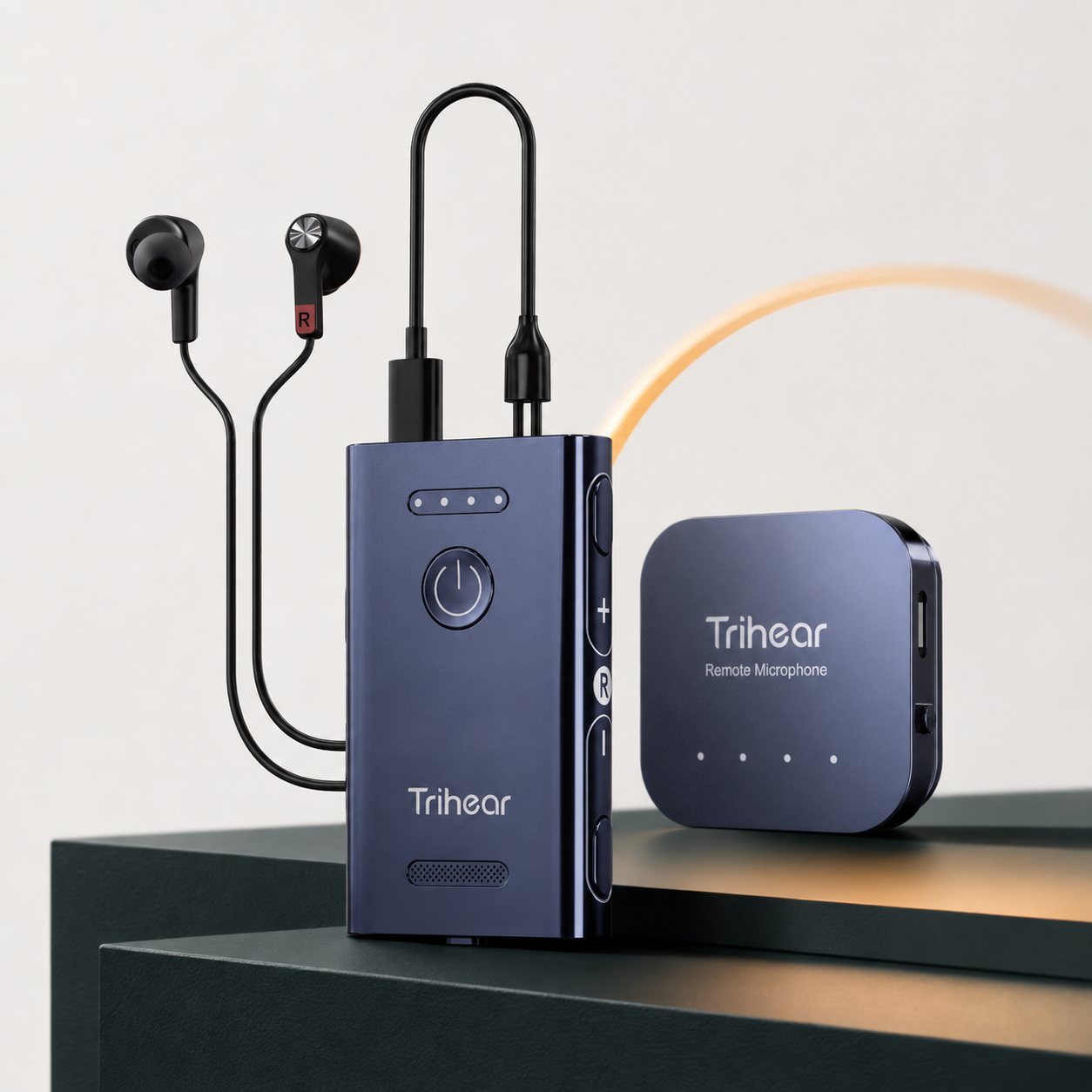
Clear physical controls can make common adjustments easier to find.
Visible status information can help users understand what the device is doing.
Automatic reconnection can reduce repeated setup.
Simple mode switching can make it easier to move between different listening situations.
These details may not sound as impressive as a long list of technical specifications, but they often shape how easily a product fits into real life.
Advanced Technology Should Still Feel Approachable
Simplicity does not mean removing useful technology.
It means making that technology easier to access.
A device may use advanced wireless communication or sophisticated sound processing while still presenting the user with a clear, straightforward experience.
That balance matters.
Because hearing technology should support everyday listening — not ask users to become technology experts before they can benefit from it.
The best technology is not only capable. It is also easy to live with.
Explore Trihear Listening Solutions
Discover hearing and assistive listening products designed around practical everyday listening needs.


Leave a comment
This site is protected by hCaptcha and the hCaptcha Privacy Policy and Terms of Service apply.