

Hearing technology is becoming more advanced every year.
More processing power. More wireless options. More connectivity. More automation.
But more technology does not automatically create a better everyday listening experience.
A product can be technically impressive and still feel difficult to use, difficult to understand, or poorly matched to the situation a person is actually trying to improve.
That raises a more useful question:
What makes hearing technology truly valuable in everyday life?
For us, the answer goes beyond the number of features a device can offer.
Useful hearing technology starts with a real listening problem, fits naturally into a person’s routine, works with the devices they already use, and remains accessible enough for people to actually benefit from it.
Start With the Listening Problem, Not the Feature List

It is easy to describe hearing technology through specifications.
Battery life.
Wireless range.
Processing channels.
Bluetooth protocols.
Latency.
Noise reduction.
All of these can matter.
But they only become meaningful when they address a real listening situation.
A person watching television may not need another general-purpose feature. They may need a more direct way to access TV audio.
Someone in a meeting may not need everything in the room to become louder. They may need the main speaker’s voice captured closer to the source.
An older adult may not need another app. They may simply need controls they can understand and operate confidently.
This is why useful product design should begin with a question:
What is making listening difficult in this situation?
Only then does it make sense to ask which technology can help.
Accessibility Is Part of Product Design
Advanced technology is important.
But there is another dimension of design that matters just as much:
How is that technology made available to the people who may benefit from it?
A device may perform well technically, but everyday accessibility can depend on much more than performance alone.
It can include:
- whether the controls are easy to understand
- whether setup requires multiple steps
- whether an app is necessary for routine use
- whether the device is comfortable to wear
- whether the price places it within reach
- whether it works with the user’s existing hearing devices
- whether support is available when something goes wrong
These details can seem less exciting than a new wireless standard or processing algorithm.
But for the person using the product, they may determine whether the technology becomes part of daily life at all.
Accessibility should not be treated as something added after the technology is finished. It is part of the design itself.
Simplicity Can Be a Form of Innovation
Innovation is often associated with adding something new.
Sometimes, however, meaningful innovation comes from removing unnecessary complexity.
Consider someone who prefers physical buttons instead of navigating an app.
Or a user who wants to switch between listening modes without opening a smartphone.
Or someone who simply wants to put on a device, adjust the volume, and continue with their day.
In these situations, fewer steps can be a benefit rather than a limitation.
That is why we often return to a simple idea:
Sometimes simplicity is part of accessibility.
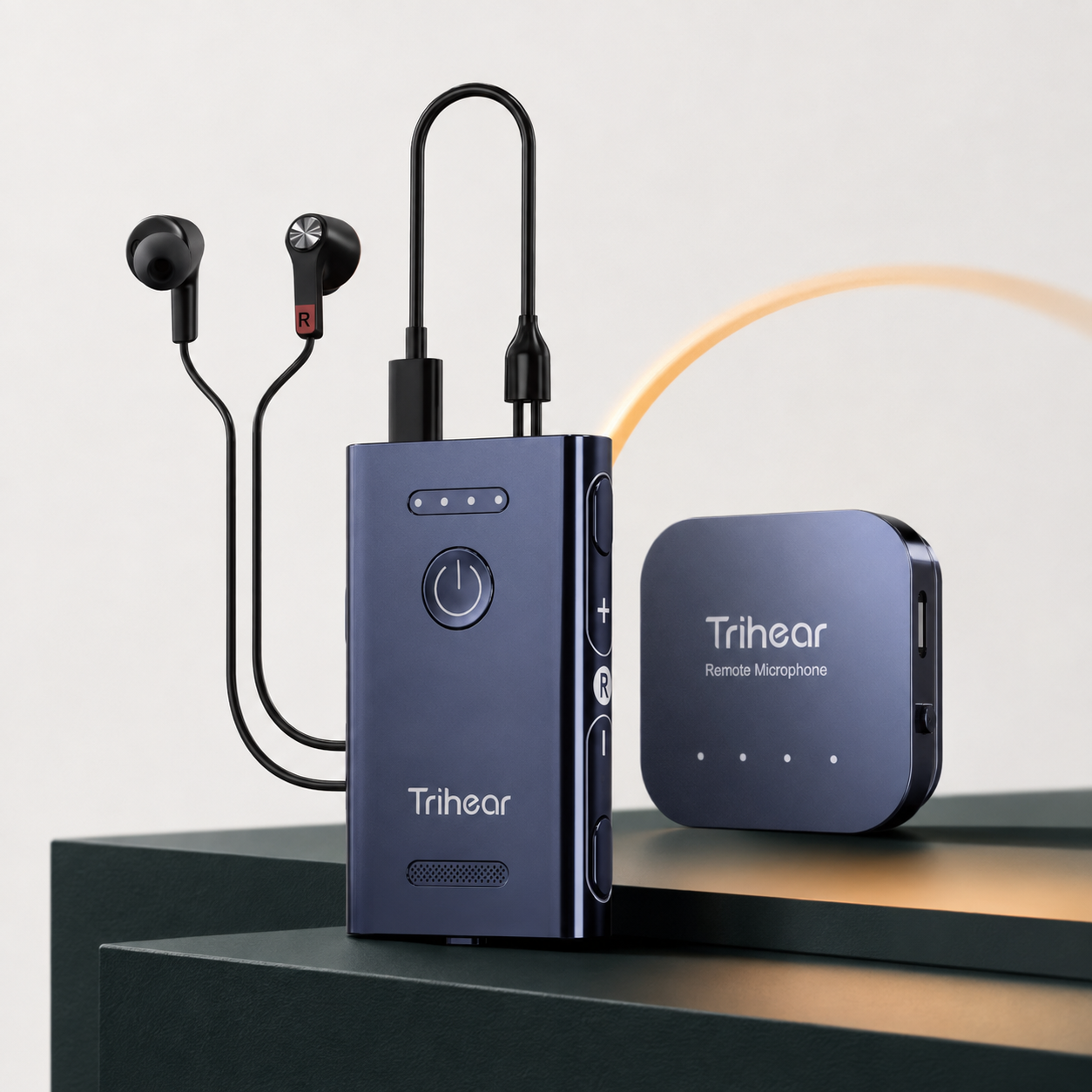
Products such as Trihear Convo, for example, use straightforward physical controls and do not require an app for routine operation.
The important point is not that every hearing device should work this way.
It is that different users may benefit from different levels of technological complexity.
A good design does not force complexity where it is not needed.
Compatibility Can Matter More Than Feature Count
A wireless accessory can offer excellent specifications and still be useless to a particular user if it cannot communicate with the hearing devices they already own.
This is especially important in modern hearing technology.
Two products may both use Bluetooth and still not be designed to work together.
Compatibility can depend on factors such as:
- exact hearing aid model
- device generation
- wireless protocol
- firmware version
- manufacturer support
That means one of the most important questions should come before comparing features:
Will this actually work with the devices I already use?
A feature only becomes useful when it works within the user’s real listening ecosystem.
This is why compatibility should be clearly explained rather than treated as a small technical detail.
Real-World Listening Is the Final Test
Laboratory measurements are important.
They help engineers understand latency, wireless performance, frequency response, battery behavior, and many other aspects of a product.
But people do not use hearing technology in laboratories.
They use it:
- across a dinner table
- in a noisy restaurant
- while watching television with family
- during a meeting
- in a classroom
- at a medical appointment
- while moving through everyday life
Real environments introduce distance, reflections, background noise, changing speakers, different room layouts, and different user habits.
That is where the practical value of a product becomes visible.
For example, a TV streamer is not useful simply because it transmits audio wirelessly.
Its value comes from whether it creates a more practical listening path between the television and the listener’s compatible hearing devices.
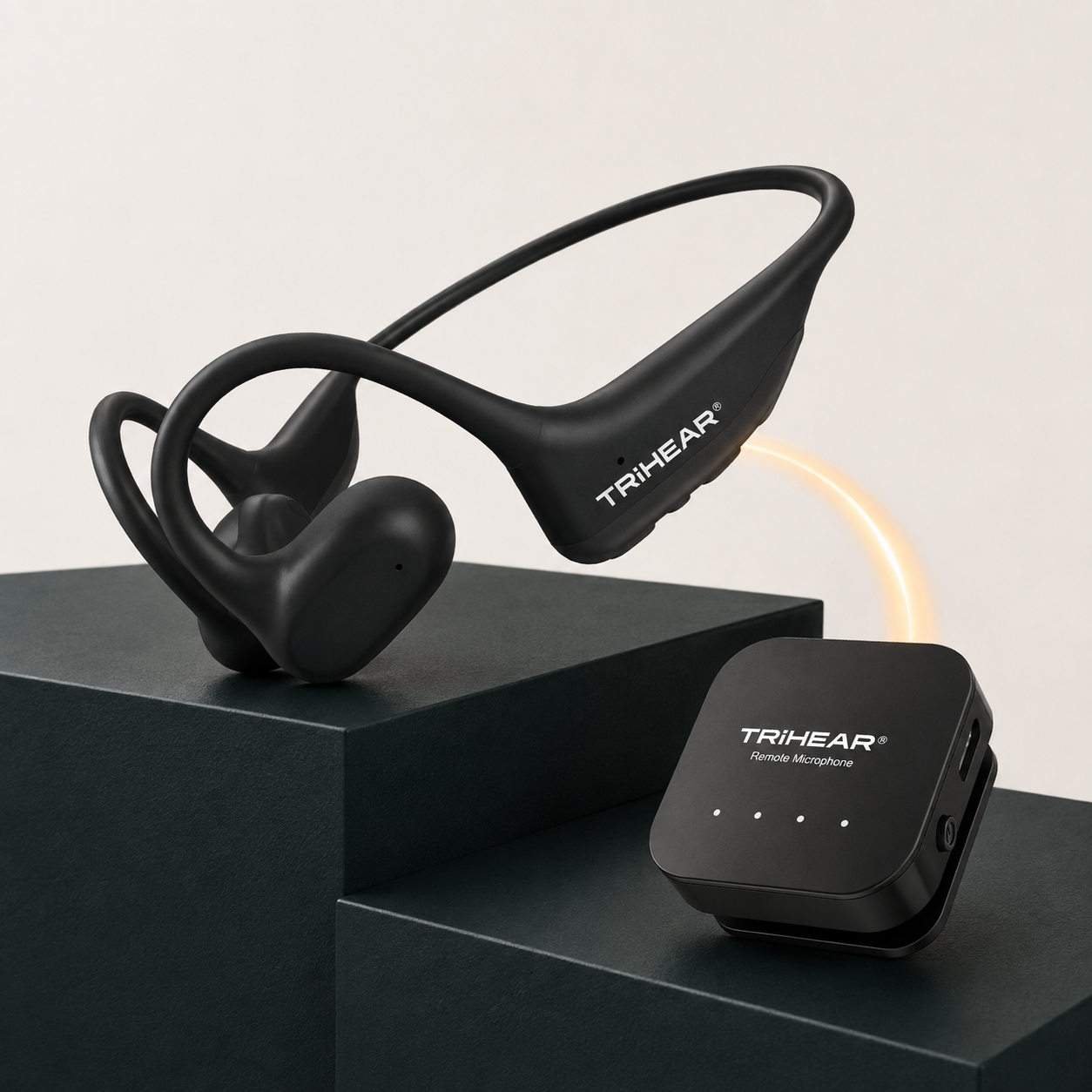
A remote microphone is not useful simply because it contains a microphone.
Its value comes from changing where the speaker’s voice is captured when distance becomes part of the problem.
The technology matters.
But what the technology allows someone to do matters more.
Good Design Fits Into Everyday Life
The best hearing technology should not constantly remind the user that they are managing technology.
It should fit naturally into the activity they are already trying to enjoy.
Watching television.
Following a conversation.
Listening to a lecturer.
Talking with family.
Participating in a meeting.
That means product design also needs to consider questions such as:
- Is the device comfortable enough to wear for the intended use?
- Can someone understand the controls without repeated instruction?
- Is charging manageable?
- Is setup required every time?
- Can the user tell which mode is active?
- Can family members or caregivers understand how to help?
These questions may sound ordinary.
That is exactly why they matter.
Everyday usability is often built from ordinary details.
Innovation Should Be Measured by More Than What a Product Can Do

Awards, technical specifications and new standards can all help show how hearing technology is evolving.
But the deeper measure of innovation is whether that technology meaningfully improves access to communication and everyday listening.
A useful innovation should help answer questions like:
Does it solve a real listening problem?
Can people understand how to use it?
Can they access it?
Does it work with the technology already in their lives?
Can it become part of a routine rather than another burden to manage?
From an audiologist’s perspective, this represents another important dimension of design.
Developing advanced technology is important, but so is considering how that technology is made available to the people who may benefit from it.
The Future May Not Only Be About Doing More
Hearing technology will continue to become more capable.
That is a good thing.
But progress should not only be measured by how many new functions can be added.
Sometimes progress means making a listening path more direct.
Sometimes it means reducing setup steps.
Sometimes it means improving compatibility.
Sometimes it means designing a device that someone feels comfortable using every day.
And sometimes innovation is simply making the right technology easier to access.
The future of hearing technology may not only be about doing more. It may also be about making the right things easier.
Explore Hearing Technology Designed Around Everyday Listening
Trihear develops assistive listening solutions around real listening situations, including television listening, conversations over distance, and everyday personal listening support.


Leave a comment
This site is protected by hCaptcha and the hCaptcha Privacy Policy and Terms of Service apply.