

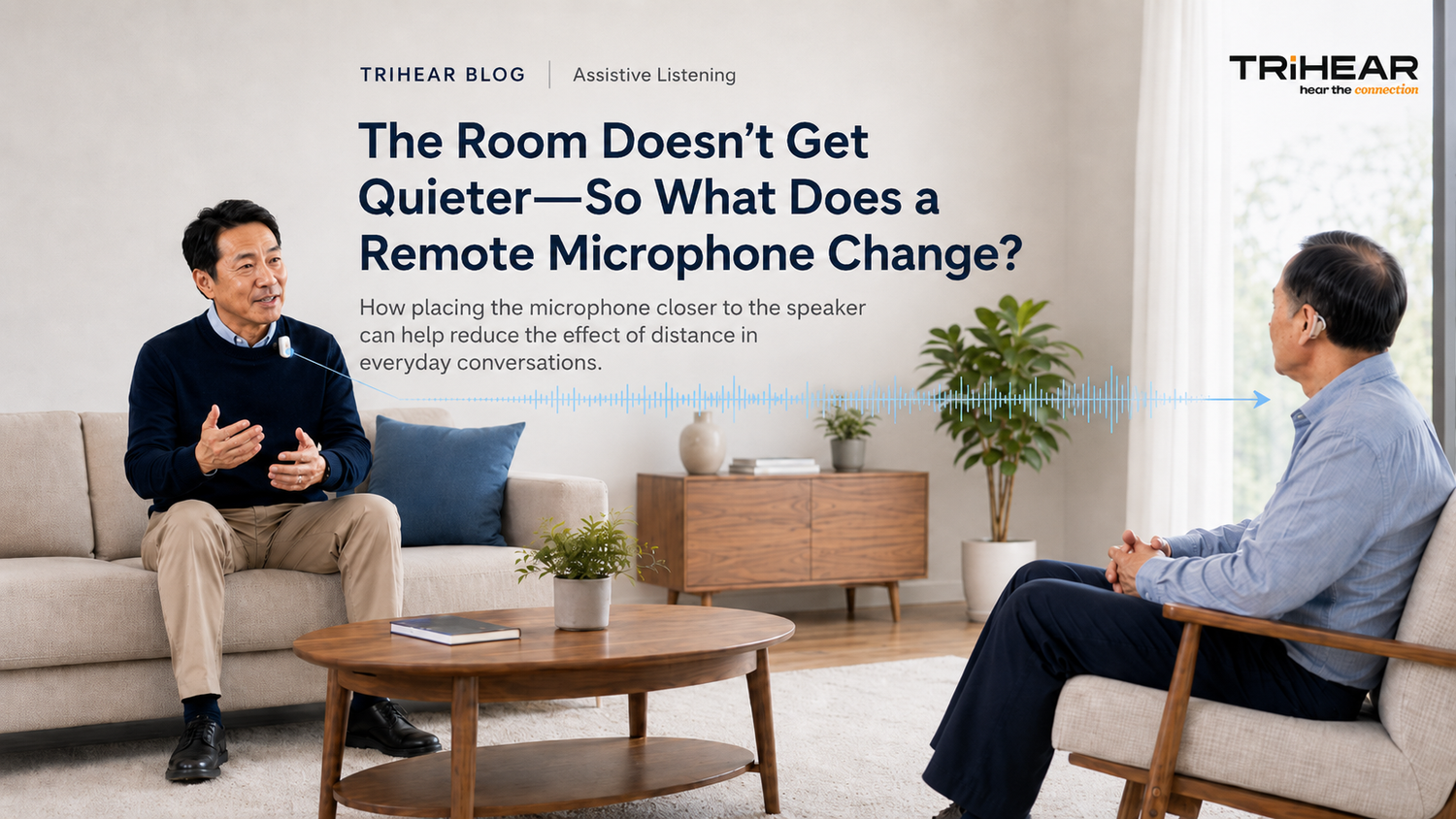
How bringing the microphone closer to the speaker can reduce the effect of distance in challenging conversations.
A conversation may feel easy in a quiet room and much harder across a restaurant table.
The difference is not always volume.
As the distance between a speaker and listener increases, the voice has to travel through the room before reaching the listener. Along the way, it may compete with nearby conversations, moving chairs, traffic, ventilation systems and other everyday sounds.
Turning up the volume may make the speaker louder—but it can also make everything else louder at the same time.
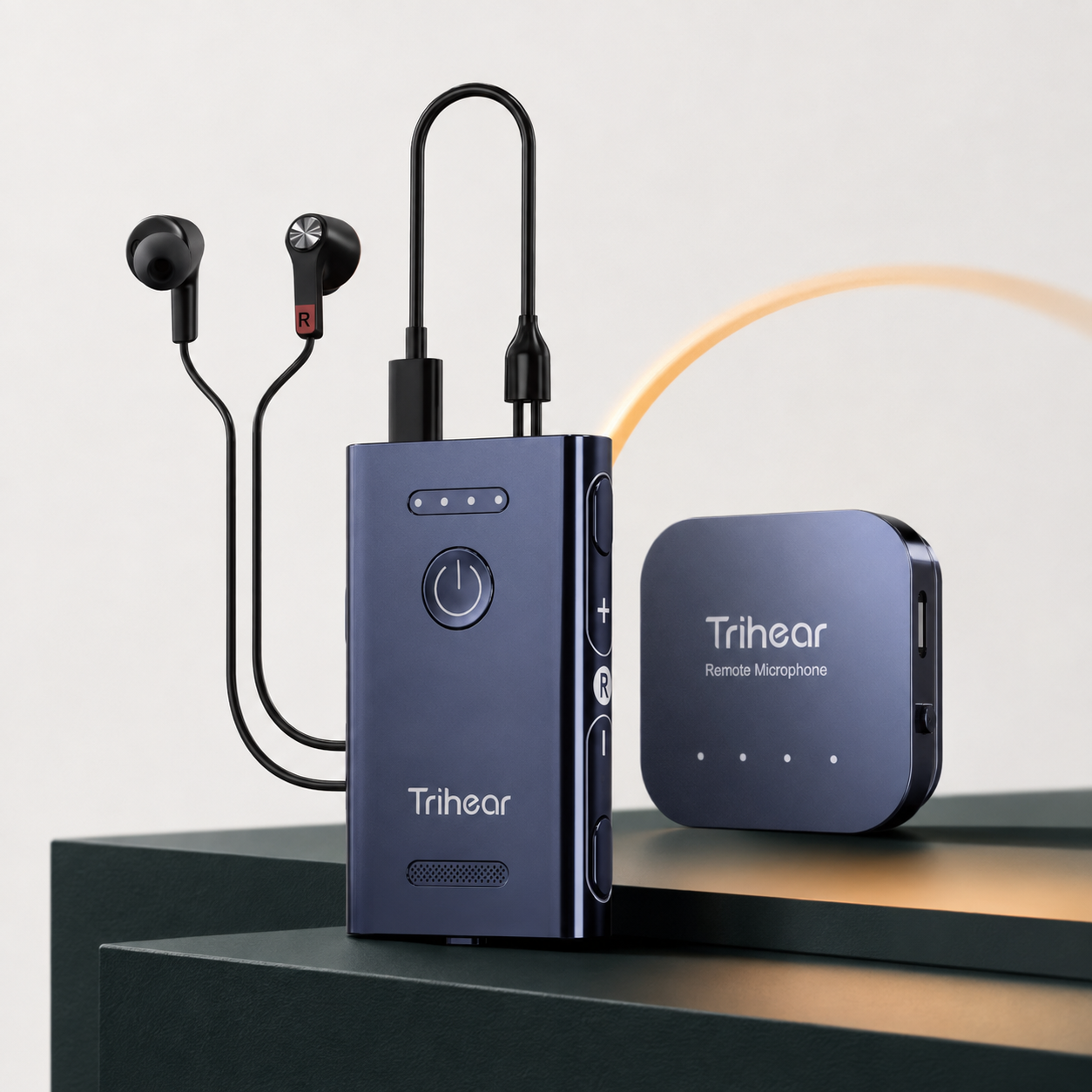
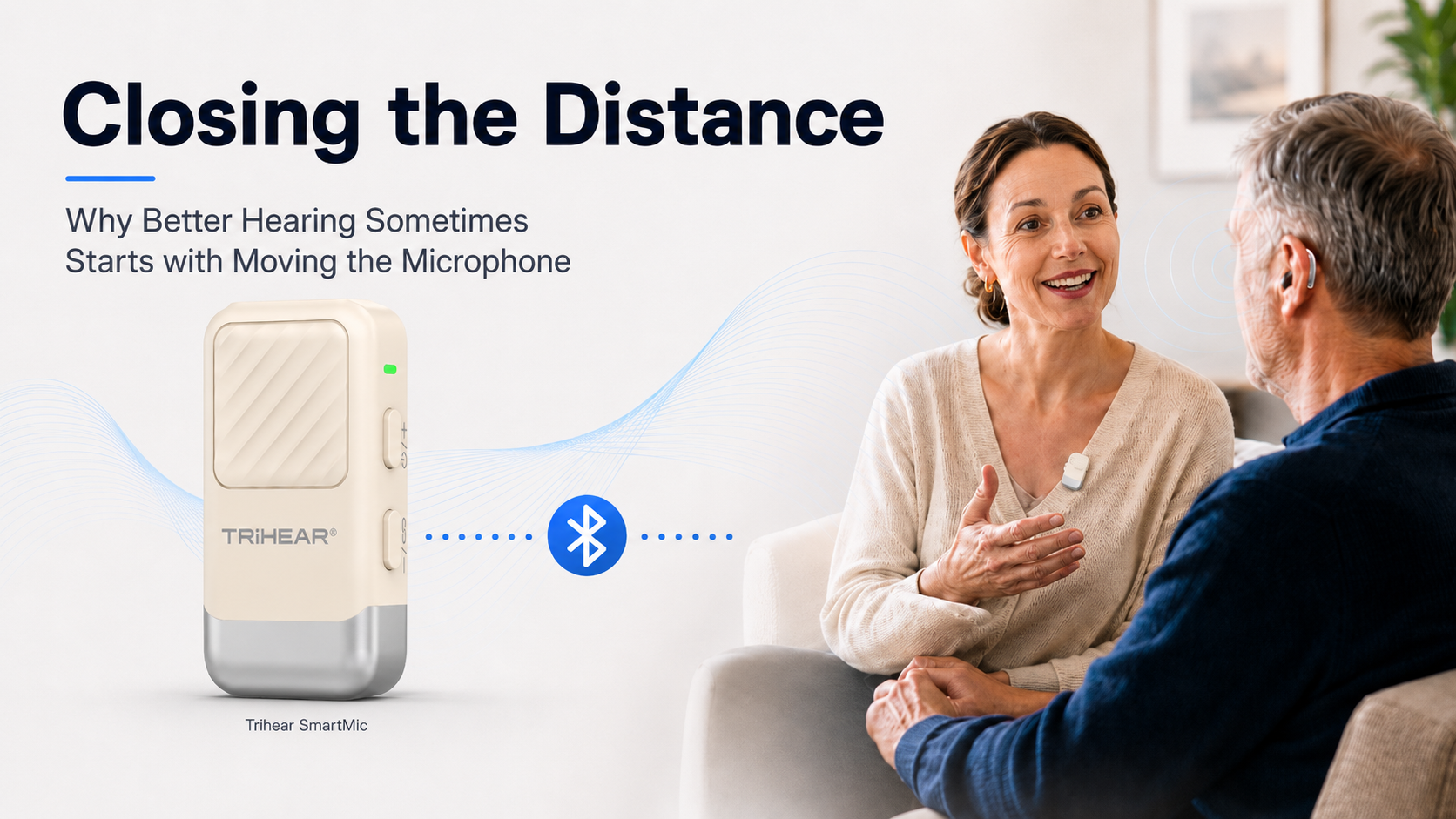
A remote microphone takes a different approach. Instead of capturing sound only from the listener’s position, it is placed closer to the person speaking. The voice is then transmitted to a compatible hearing aid or a dedicated assistive listening receiver.
The room does not become quieter. What changes is where the important voice is captured and how directly it reaches the listener.
Why Distance Can Make a Conversation Harder

Most conversations do not happen under ideal listening conditions.
People speak from across a table, walk around a room, turn their heads or compete with several other voices. Restaurants, classrooms, cars and community spaces all introduce their own acoustic challenges.
When a speaker is nearby, their voice usually reaches the listener more directly. As the distance increases, the voice becomes less prominent compared with surrounding sounds.
The room itself also affects what the listener receives. Hard surfaces can reflect sound, while several people speaking at once can make it harder to focus on one voice.
This is why a person may communicate comfortably in a quiet, face-to-face conversation but struggle during a family gathering or group activity.
The challenge may not be that the voice is completely inaudible. It may be that the voice is no longer distinct enough from everything happening around it.
What a Remote Microphone Changes

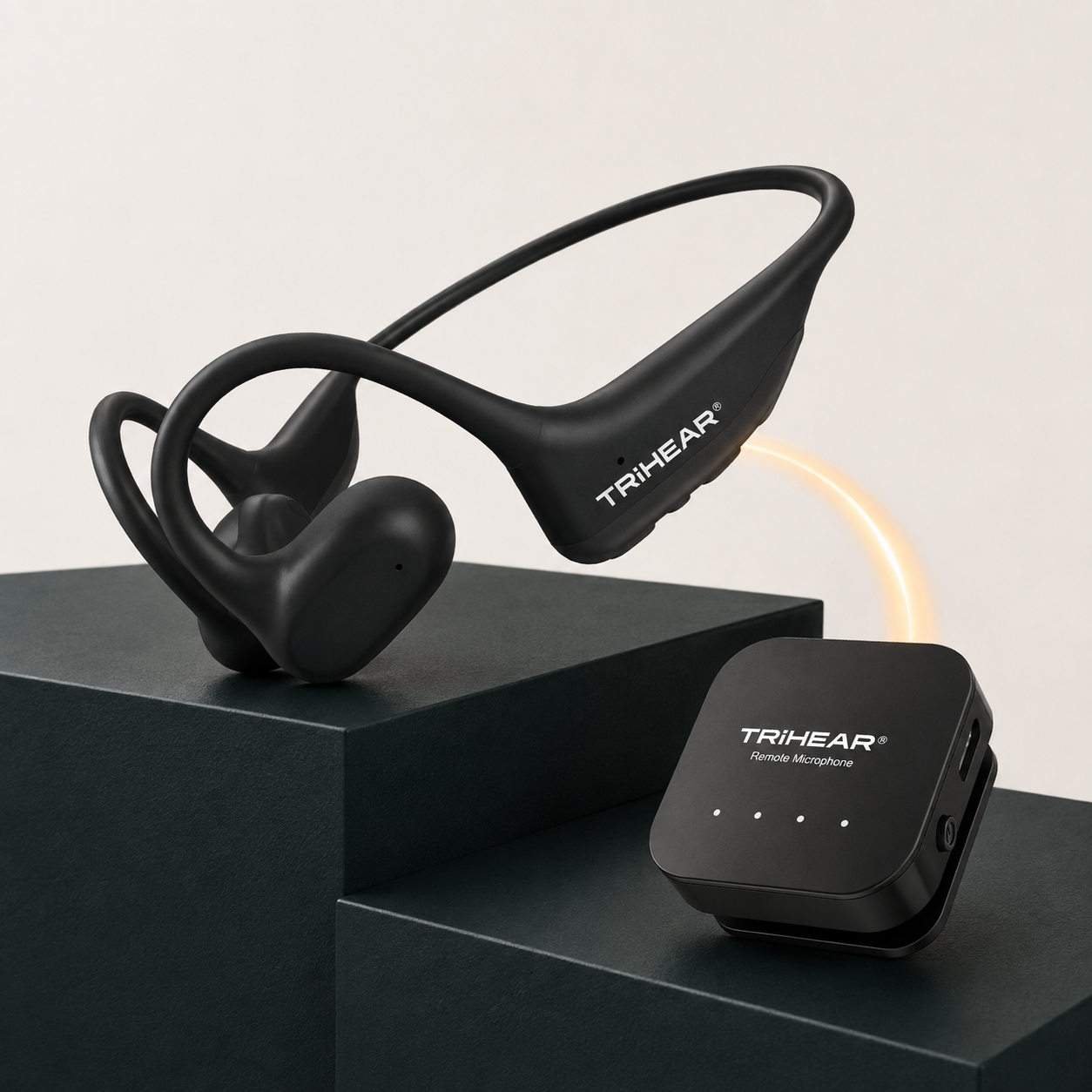
A remote microphone is a small wireless microphone placed closer to the person speaking.
Depending on the system, it may send the captured voice to compatible hearing aids or to a dedicated listening receiver worn by the listener.
Its value comes from changing the point of sound capture.
Without a remote microphone, the listening device typically receives sound from the listener’s position. That may include the speaker’s voice, but also nearby conversations, room noise and other competing sounds.
With a remote microphone, the voice is captured nearer to its source—before distance and the surrounding environment have as much opportunity to affect it.
A remote microphone does not remove every sound in the room, and it cannot guarantee perfect understanding in every situation. Microphone placement, room conditions, device compatibility and the listener’s individual hearing needs all matter.
However, it can create a shorter and more direct listening path between the speaker and the listener.
The key difference is not simply more amplification.
It is bringing the microphone closer to the voice that matters.
Where Can This Approach Be Useful?
Remote microphones are particularly relevant in situations where there is a clear main speaker but distance or surrounding noise makes the voice harder to follow.
Common examples include:
- a conversation across a dining table;
- a caregiver speaking with an older adult from across the room;
- a teacher or presenter addressing a class;
- a small meeting or group activity;
- a conversation inside a moving car;
- a family gathering in which several voices are present.
In these situations, the microphone can be clipped to the speaker’s clothing or placed near them, depending on the device and intended use.
The experience may be less straightforward when several people are speaking rapidly from different directions. A remote microphone placed near one person naturally prioritizes that speaker, so its position may need to change as the conversation moves.
This is why remote microphones should be understood as tools for specific listening situations rather than universal solutions for every environment.
Different Users May Need Different Listening Setups
Not every remote microphone system works in the same way.
Some are designed as accessories for people who already use compatible hearing aids. The microphone connects directly to the user’s existing hearing devices, allowing the speaker’s voice to be streamed without requiring a separate listening receiver.
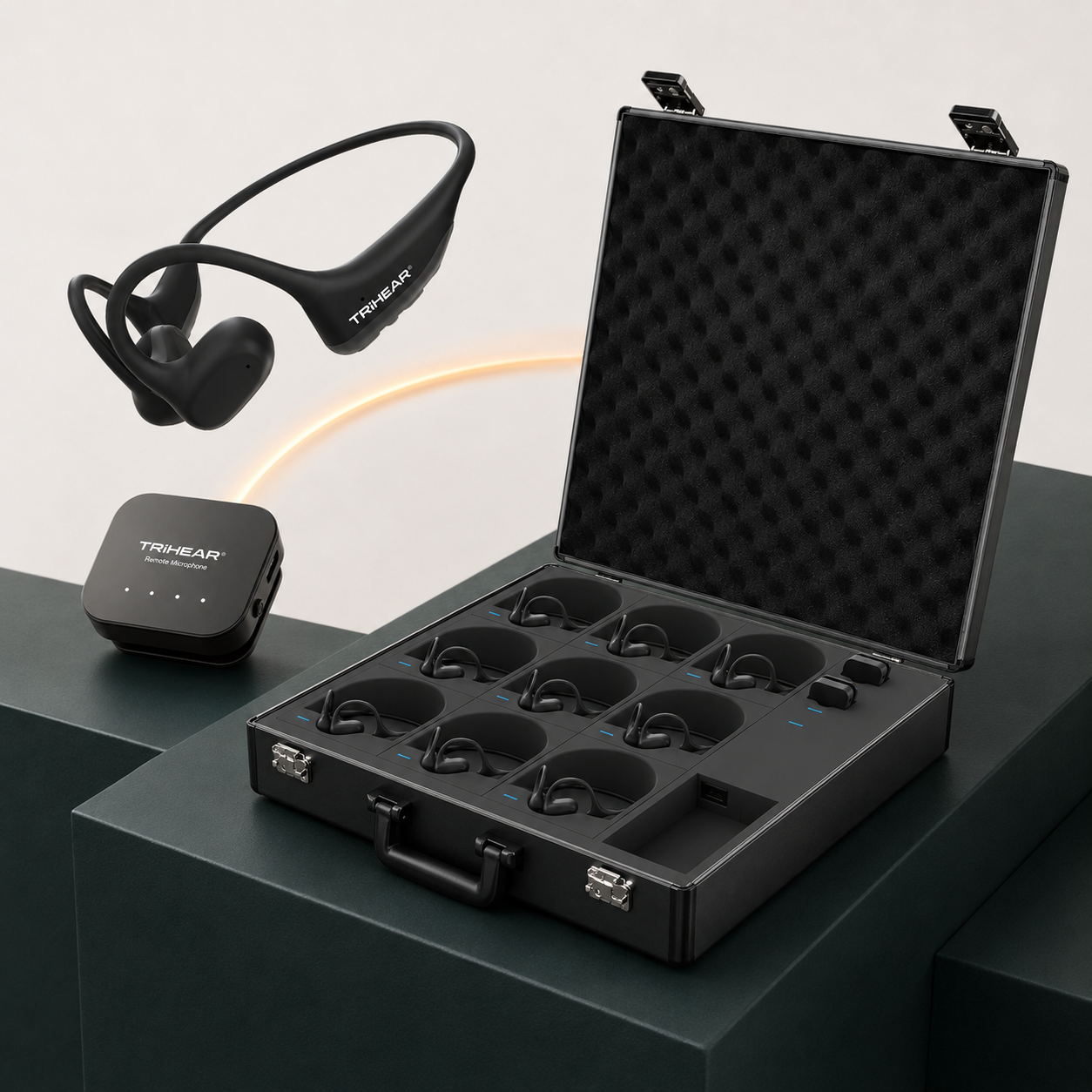
Other systems include both a remote microphone and a dedicated receiver. These may be useful for people who do not currently wear compatible hearing aids, or who prefer a separate assistive listening solution for particular situations.
The most appropriate setup depends on several practical questions:
- Does the user already wear hearing aids?
- Are those hearing aids compatible with the microphone?
- Is the main difficulty distance, background noise or television listening?
- Will the system be used mainly at home, in a classroom or during group activities?
- Is the device simple enough for the user or caregiver to operate comfortably?
Remote microphone support is one part of TRIHEAR’s broader range of assistive listening solutions for everyday communication, television listening and shared listening environments.
Rather than focusing only on the number of features, it is more useful to begin with the listening situation and the needs of the person using the system.
A Different Way to Think About Better Listening
When a conversation becomes difficult, increasing the volume can feel like the most obvious solution.
But volume is only one part of the listening experience.
Distance, microphone position, competing voices and the acoustics of the room can all influence how easily speech is followed.
A remote microphone does not make the environment silent. It changes how the speaker’s voice enters the listening system.
For some users, that may mean connecting a microphone to compatible hearing aids. For others, a complete assistive listening system with its own receiver may be more practical.
The right solution depends on the user’s existing devices, listening environment and ability to operate the system comfortably.
Better listening does not always begin with making everything louder.
Sometimes, it begins by bringing the microphone—and the voice that matters—closer.
Still Looking for the Right Hearing Solution?
Whether you're exploring OTC hearing aids for yourself or helping a loved one, choosing the right device starts with understanding your needs.
Explore Trihear's hearing solutions designed for everyday conversations, TV listening, and clearer communication.
[Explore Trihear Products →]

发表评论
此站点受 hCaptcha 保护,并且 hCaptcha 隐私政策和服务条款适用。