




“Can you say that again?”
Once or twice, it may not feel like a big deal.
But when the same request happens again and again during dinner, a family gathering, a meeting, or a group conversation, listening can start to feel less natural and more like work.
Hearing difficulty is not always about whether sound is loud enough. Sometimes, the real challenge is keeping up with meaning, timing, and context when parts of a conversation are missed.
Hearing a Conversation Is More Than Hearing Volume

A person may hear that someone is speaking and still miss important parts of what was said.
A few words may be unclear. The beginning of a sentence may be missed. A nearby conversation may overlap with the speaker. In a group, the topic may shift before the listener has fully understood the previous point.
That means conversation depends on more than volume.
It also depends on being able to follow who is speaking, what was just said, how the topic is changing, and which words carry the key meaning.
When some of that information is repeatedly missed, the listener has to do more work to stay involved.
The Hidden Work of Filling in the Gaps

People naturally try to compensate when they miss part of a conversation.
They may use context to guess a word, watch facial expressions, follow lip movements, remember what was said a few seconds earlier, or ask someone to repeat the sentence.
Any one of these strategies can be useful.
The difficulty comes when they are needed again and again.
A conversation that might normally feel effortless can become an active task:
Listen → Miss part of the sentence → Guess → Check → Ask again → Catch up
That extra attention can make long conversations, noisy environments, or fast-moving discussions feel more tiring.
This is one reason the experience is sometimes described as listening fatigue or hearing fatigue.
The Effort Is Shared
Communication effort does not always stay on one side of the conversation.
When a listener misses part of what was said, the other person may also begin adjusting how they communicate.
They may repeat the sentence, speak louder, move closer, slow down, rephrase the message, or check whether they were understood.
None of these actions is unusual.
But when they become part of almost every interaction, the rhythm of conversation can start to change for everyone involved.
A simple exchange becomes something both people have to manage.
When Following the Conversation Gets Harder
Group conversations can be especially challenging because they move quickly.
One person speaks, another interrupts, someone changes the subject, and background noise continues at the same time.
If a listener misses one important sentence, it may become harder to understand what everyone is discussing next.
In some situations, people may respond by becoming quieter, waiting longer before speaking, or avoiding repeated requests for clarification.
That does not necessarily mean they are uninterested in the conversation.
Sometimes, participating simply requires more effort than it used to.
This can happen at family dinners, restaurants, community gatherings, classrooms, meetings, or other situations where several people are speaking.
Different Problems Need Different Listening Paths

There is no single listening solution for every situation.
The more useful question is often not:
“How can I make everything louder?”
but:
“What is making this particular conversation difficult?”
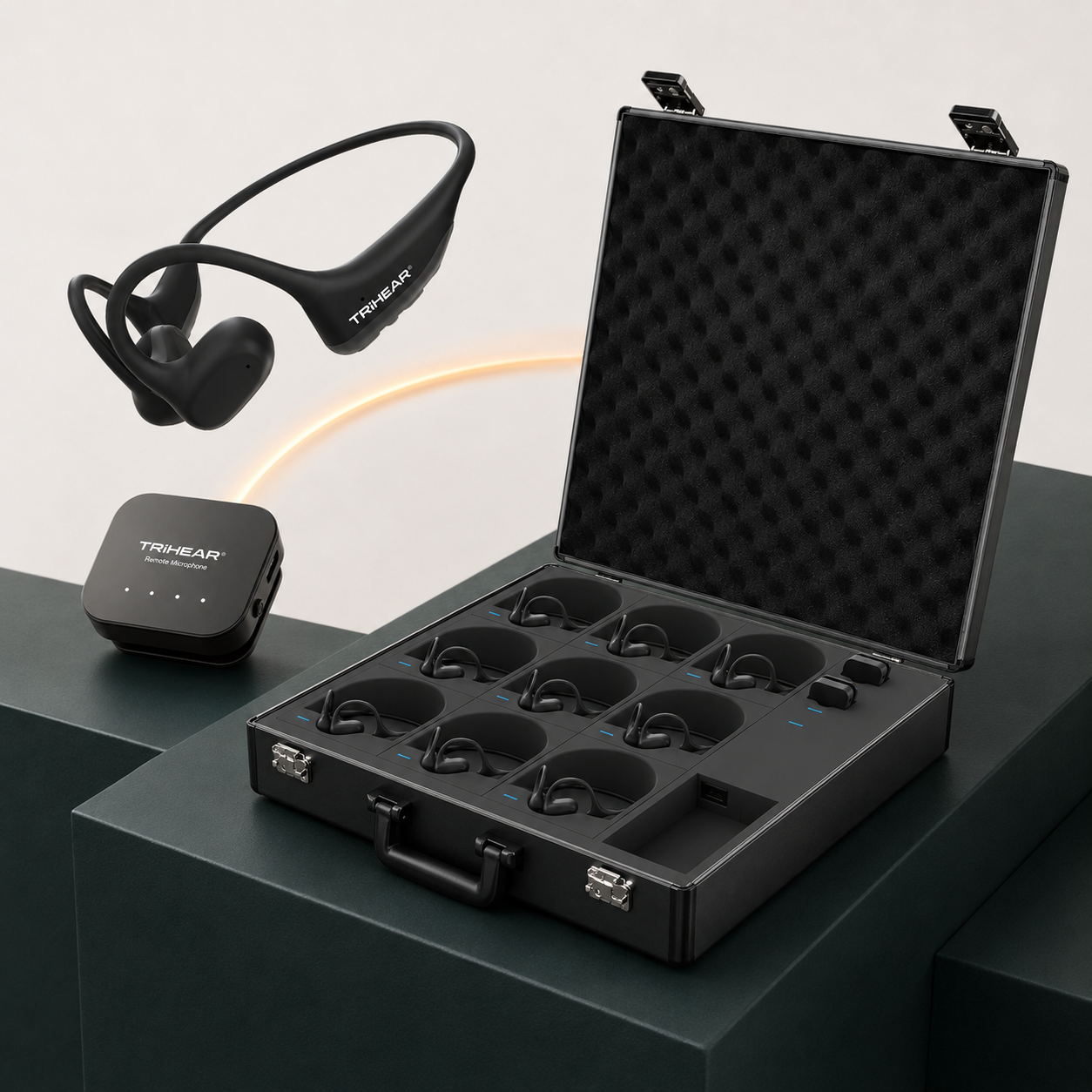
If distance is the main problem, a remote microphone can be positioned closer to the person speaking and send the captured audio to a compatible hearing device.
If television listening is difficult, a TV streamer can create a more direct path between the television and the listener.
If someone prefers a separate listening setup, a dedicated personal listening system may provide its own receiver and controls.
The listening environment matters, and so does compatibility with the devices a person already uses.
For a broader explanation of these categories, see our guide:
What Do Hearing Aid Accessories Actually Do? Remote Microphones, TV Streamers and More
https://trihear.com/blogs/trihear-blog/what-do-hearing-aid-accessories-do
Making Conversation Easier, Not Simply Louder
The goal of hearing support is not always to increase volume.
Sometimes, it is about reducing the amount of effort required to follow what is happening.
That may mean shortening the distance between speaker and microphone, creating a more direct audio path, choosing a listening tool for a specific environment, or simply making communication easier to follow.
Because conversation is not only about hearing words.
It is about being able to stay connected to what is being said without having to constantly reconstruct what was missed.
And when listening becomes easier, the conversation itself can feel easier too.
Find the Right Listening Support for the Situation
Different listening challenges may call for different solutions.
Learn how remote microphones, TV streamers and personal listening systems work, and explore which type of support may fit your listening situation.
Learn more about hearing aid accessories →
https://trihear.com/blogs/trihear-blog/what-do-hearing-aid-accessories-do
Explore TRIHEAR listening solutions →
https://trihear.com/collections/all



Leave a comment
This site is protected by hCaptcha and the hCaptcha Privacy Policy and Terms of Service apply.