

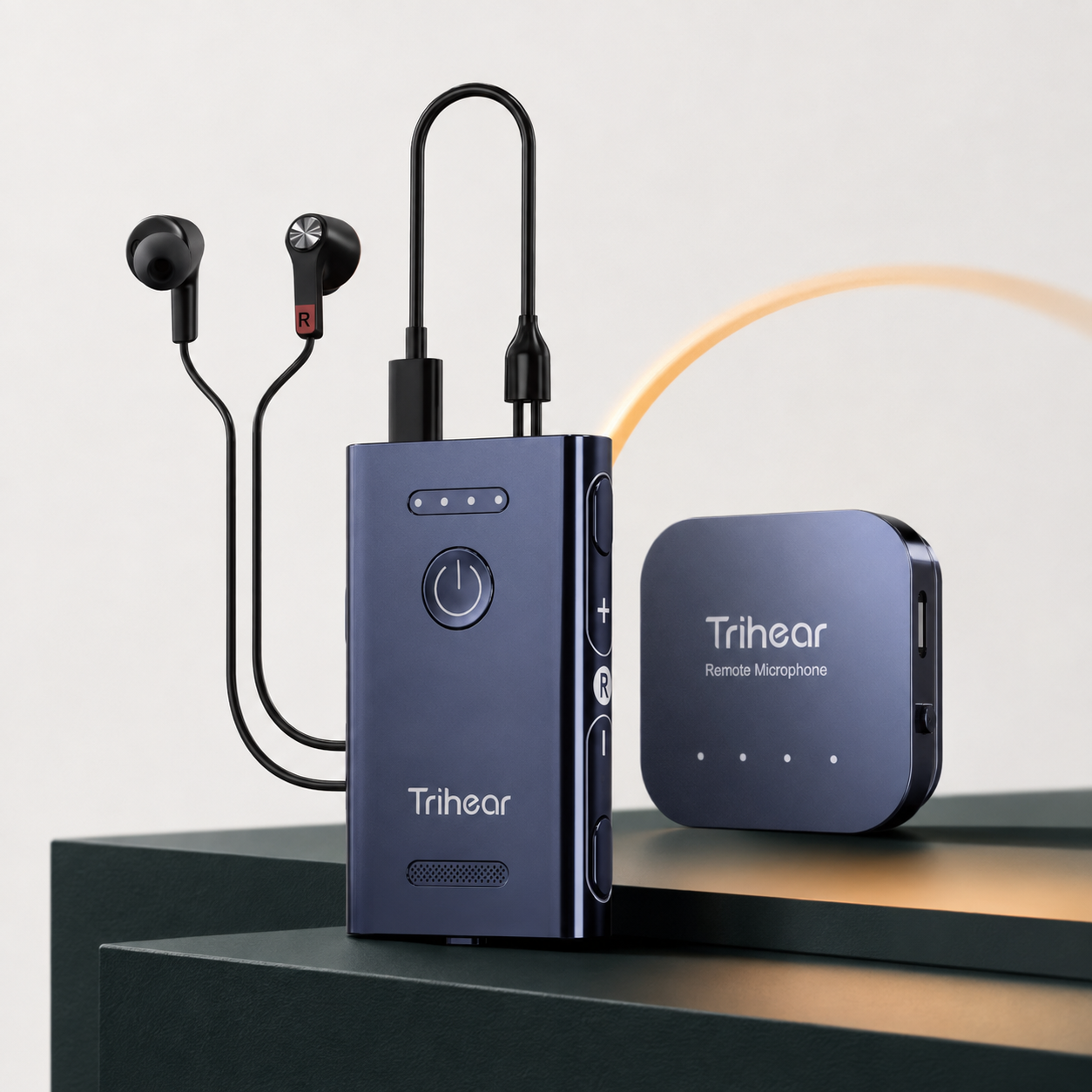
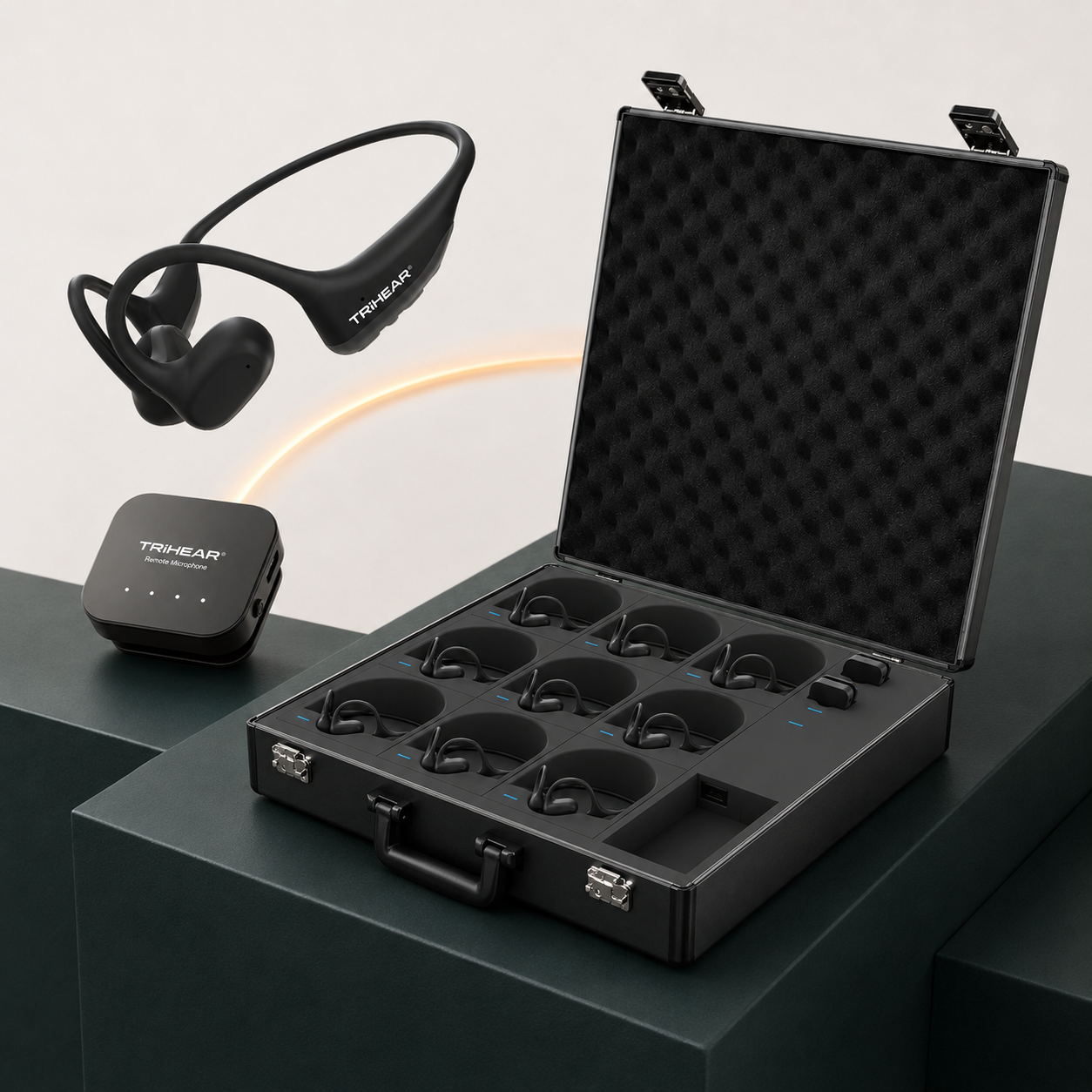
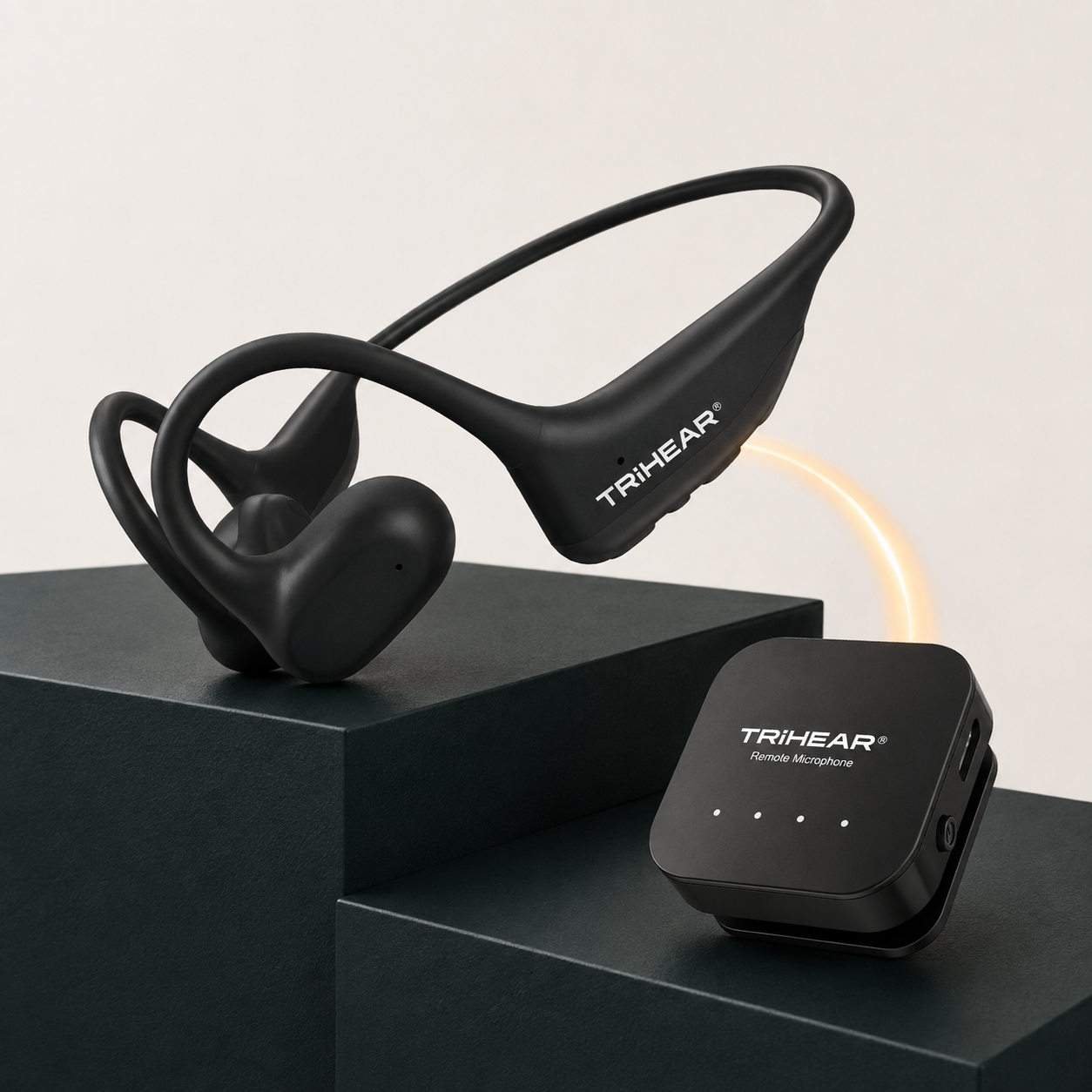
Every day at Trihear, our team is guided by a simple conviction: technology exists to bring people closer to life, not to make it more overwhelming.
Yet if you look at today's consumer audio and assistive hearing landscape, you'll notice a growing trend toward software bloat. We live in an era where almost every new piece of hardware arrives with an unavoidable instruction: “Download our mobile companion app to get started.”
For years, major hearing aid manufacturers have followed this software-first playbook. If you want to stream television audio directly to your hearing aids, you are often expected to purchase a proprietary transmitter, connect it to your television, open a smartphone app, create an account, and navigate multiple setup steps before enjoying a simple evening of television.
Having spent years working across consumer electronics, smart wearables, and technology marketing, I have seen firsthand how products often become more complicated as they become more capable. In many cases, that complexity is accepted as progress.
I am not convinced it always should be.
When our team began developing the Trihear ClearTV Series, we challenged ourselves with a simple question: What if TV listening technology felt less like configuring software and more like turning on a television?

Rethinking the "Flashing Light" Problem
When we researched existing hearing aid TV streaming accessories—from the Oticon TV Adapter and Signia StreamLine TV to the GN ReSound TV Streamer and Starkey StarLink Edge—we noticed a surprisingly consistent design pattern. Most devices communicate through a rigid combination of small LED indicators, printed manuals, and smartphone companion applications.
From a manufacturing perspective, LED indicators are efficient and cost-effective. From a user experience perspective, however, they often create unnecessary uncertainty.
When a device displays a flashing blue, green, red, or amber light, what exactly is it trying to communicate? Has the connection failed? Is the optical audio signal disconnected? Is the device pairing? Has the audio source changed? For many users, especially older adults, the only way to find the answer is to search through a manual or open an app just to decode what the hardware is attempting to say.
During our research, one observation stood out: despite significant advances in wireless protocols, Bluetooth technology, and audio quality, the user interface itself has changed very little. Most products have focused heavily on connectivity and compatibility. Far fewer have focused on helping users immediately understand what is happening in real time.
That became a central design challenge for our team. We believed assistive technology should communicate in plain language—not riddles.
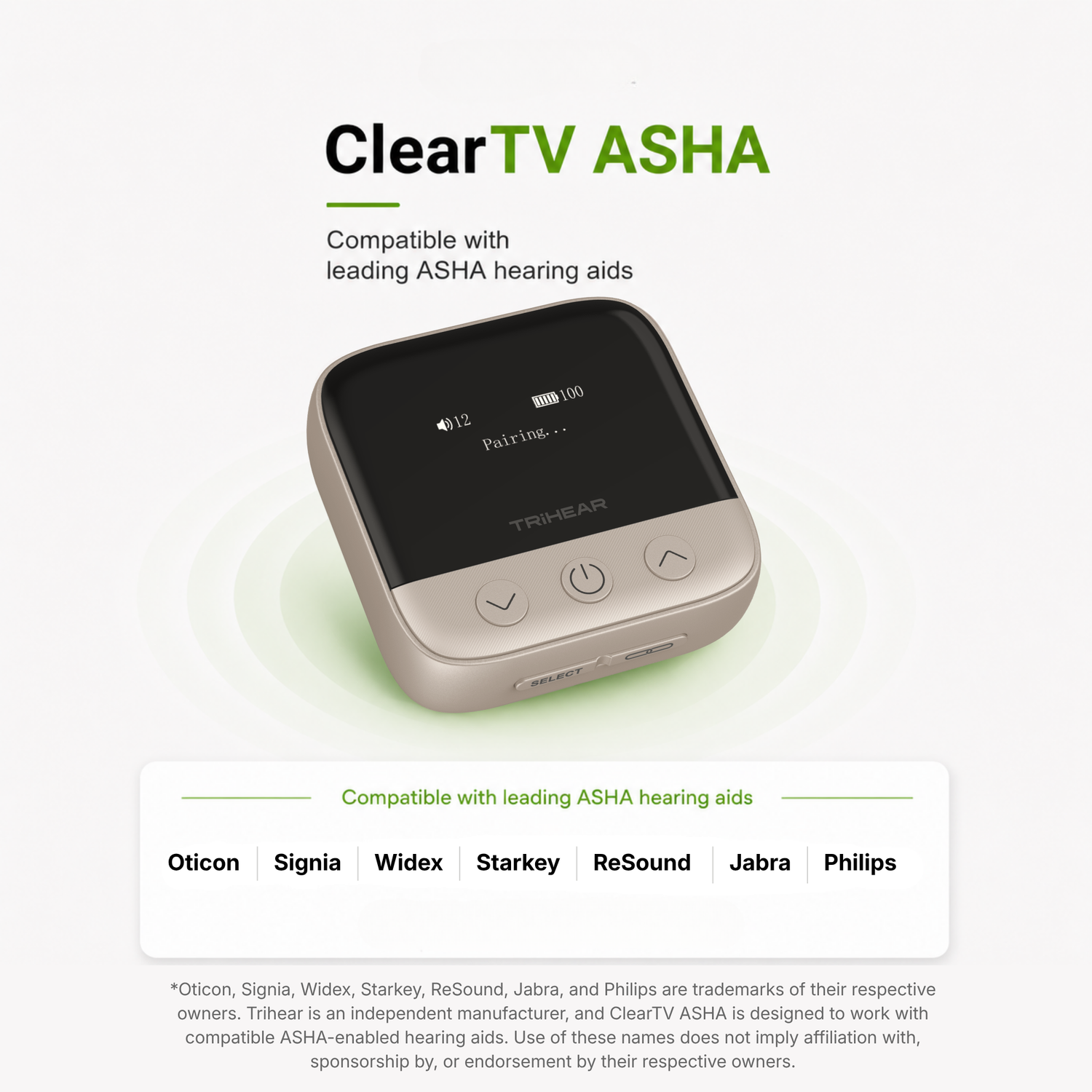
That is why we designed the ClearTV Series with an integrated, high-contrast LCD operation display directly on the device. Instead of forcing users to interpret flashing lights, the screen communicates clearly and instantly:
-
Pairing...
-
Connected
-
Volume Level
-
Input Source
-
Battery Status
By replacing visual guesswork with visual certainty, we built a product that respects the user's time and confidence.

Designing Around Protocols, Not Brands
Another trend became clear as we examined the current market. Many TV streaming accessories are designed around restrictive brand ecosystems rather than universal listening experiences.
For instance, a Phonak TV Connector or a Connexx Smart Transmitter is designed primarily for compatible Phonak and Unitron devices. Other manufacturers follow similar locked approaches within their own ecosystems. These solutions work well within their intended environments, but they create immense challenges for households where different hearing technologies coexist. What happens if a husband wears Phonak and his wife wears Oticon?
At Trihear, we approached the problem from a different perspective. Instead of starting with corporate brand names, we started with open communication protocols.
The ClearTV family was therefore divided into two highly optimized solutions:
-
ClearTV (Universal Bluetooth): Designed with a specialized 2.4GHz wireless architecture optimized for compatible Bluetooth-enabled hearing devices, including selected Phonak and Unitron models.
-
ClearTV ASHA: Engineered specifically for Audio Streaming for Hearing Aids (ASHA), delivering low-latency stereo audio directly to compatible ASHA-enabled hearing aids from multiple manufacturers, including selected devices from Oticon, Signia, Widex, Starkey, ReSound, Jabra, and Philips.


As someone who deeply values audio performance, I am particularly proud of the engineering work behind our latency management. Anyone who has experienced dialogue arriving noticeably after an actor's lips move understands how disruptive synchronization issues can be to the brain. Our engineering team invested significant effort into minimizing transmission delay, helping ensure that speech remains natural, synchronized, and comfortable during extended listening sessions.
Hearing technology should disappear into the experience—not become the experience itself.
Untethering the Living Room
One final design limitation appeared throughout the category: most TV streaming accessories are built as stationary, wall-bound devices. They remain permanently connected to a specific television through fixed installations and power cords.
For many users, this is perfectly acceptable. But we began asking a different question: What if TV listening could move seamlessly with the user? What happens when someone wants to watch the evening news in the living room, then enjoy a movie in the bedroom later that night? In many traditional setups (like with the Widex TV PLAY), this requires reaching behind entertainment centers, unplugging cables, reconnecting inputs, and relocating hardware.
We wanted TV listening to follow people—not televisions.
That philosophy led us to include a built-in rechargeable battery capable of supporting up to 12 hours of continuous operation. This single choice transforms ClearTV from a stationary accessory into a portable audio companion.
During the day, it can remain connected to a primary television through a digital optical connection. Later, it can move effortlessly to a bedroom television, monitor, or another compatible audio source using its 3.5 mm auxiliary input. No wall outlet required. No complicated reconfiguration. Just listening.

Engineering with Empathy
The future of hearing technology will not be defined solely by faster wireless protocols, new codecs, or increasingly sophisticated software. It will also be defined by empathy.
By understanding how real people interact with technology in the comfort of their homes, we can build products that reduce daily friction instead of adding to it.
At Trihear, we believe technology exists to bring people closer to life. The ClearTV Series is our attempt to put that belief into practice—through simplicity, clarity, portability, and a listening experience designed around people rather than systems.
Because great technology should never get in the way of what matters most: the conversations, stories, and moments that bring us together.

Leave a comment
This site is protected by hCaptcha and the hCaptcha Privacy Policy and Terms of Service apply.